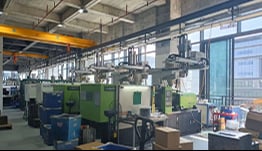
Hardness, Wear Resistance, and Thermal Fatigue: Core Determinants of Injection Mold Durability
Mechanical Property Trade-Offs: Hardness vs. Toughness in High-Cycle Injection Molding
Choosing materials for injection molds is all about finding that sweet spot between hardness and toughness, something engineers wrestle with constantly. When it comes to hardness measured on the Rockwell C scale (HRC), we've seen data from ASM International back in 2023 showing that higher hardness levels can cut down on abrasive wear from glass filled resins by around 40%. But push things too far past 55 HRC and those thin parts in the mold start cracking under stress. On the flip side, while tougher materials won't shatter during those intense pressure cycles, they tend to wear away faster when dealing with rough plastics such as nylon. That's where tool steels like H13 really shine. These steels hit that Goldilocks zone right around 48 to 52 HRC, which means they last through hundreds of thousands of cycles in car manufacturing without breaking down. The automotive industry relies heavily on this balance because nobody wants their production line grinding to a halt over mold failures.
Thermal Fatigue Cracking Mechanisms in Repeated Heating/Cooling Cycles
Rapid temperature fluctuations between 80°C–260°C induce thermal stress exceeding 700 MPa at mold surfaces (Society of Plastics Engineers 2024), propagating micro-cracks through three phases:
- Surface oxidation from polymer decomposition
- Differential expansion between core and surface layers
- Stress concentration at sharp corners
This cumulative damage manifests as “craze cracking” after ~100k cycles in P20 steel processing ABS. Molds with higher thermal conductivity—such as beryllium copper—reduce thermal gradients by 35%, delaying crack initiation.
Material-Specific Performance Benchmarks for Injection Mold Durability
Tool Steel (P20, H13, S7): Lifespan Ranges by Application Volume and Resin Type
In high volume injection molding operations, tool steels are the go to choice because they resist wearing down over time. Take H13 steel for instance it can handle around half a million to a million production cycles when working with tough materials like glass filled nylon. But things change when there's constant heat exposure, where H13 performance falls off significantly after about 250 thousand cycles. For less demanding jobs, P20 steel provides good value for money, lasting between 250k and 500k cycles with softer plastics such as polypropylene. When impact resistance matters most, S7 steel stands out, holding together well past 300 thousand cycles even when dealing with those harder engineering grade resins. The difference in how fast these steels conduct heat makes a real world difference too. H13 at 24.6 watts per meter kelvin cools slower than P20 which has better thermal properties at 29.5 W/mK. This affects how quickly molds can be reused in busy manufacturing environments where every second counts.
Non-Traditional Options: Aluminum and Beryllium-Copper in Low-to-Medium Volume Injection Mold Applications
When making prototypes or running production below 100,000 cycles, aluminum molds cut down on waiting time by around 60% and bring costs down about 45% compared to steel options. The problem comes from aluminum's relatively soft nature with a Vickers hardness rating between 60 and 100 HV. This means it typically lasts only 50k to 100k cycles when working with common plastics such as polyethylene. Beryllium copper fills the space between these extremes. It conducts heat at about 105 watts per meter Kelvin, three times better than regular tool steel, which actually makes molding processes for things like electronic casings made from ABS or polycarbonate go 10 to 15% quicker. For medical device manufacturers running mid volume batches, beryllium copper can handle over 150 thousand cycles before needing replacement. But watch out for chlorinated resins since they tend to cause stress cracks in the material over time.
Chemical and Environmental Factors That Accelerate Injection Mold Degradation
Corrosion from Halogenated Resins (e.g., PVC, FR-PC) and Mitigation via Stainless or Coated Mold Materials
When working with halogenated resins, we find that they tend to release corrosive substances during processing. Chlorine comes out of PVC materials while bromine is released from flame retardant polycarbonates (FR-PC). These chemicals speed up the electrochemical breakdown process in regular tool steels used throughout the industry. What happens next? Pitting and surface erosion start to appear, which eventually affects dimensional accuracy after around 50 thousand production cycles. To combat this problem, many shops turn to stainless steel options like 420SS because of chromium's protective oxide layer. Another approach involves applying coatings such as titanium nitride or nickel-PTFE, both of which cut down surface reactivity by roughly 85%. Proper vent design also matters since it prevents corrosive gases from getting trapped inside molds. The situation gets even worse when dealing with glass filled compounds where abrasion and corrosion work together destructively. Industry leaders have seen impressive results though - some report tripled tool life when moving to coated H13 steels for large scale FR-PC production batches running over 200k shots.
Balancing Durability with Practical Constraints in Injection Mold Design
Getting injection molds to last longer means making some tough calls against what's actually possible in manufacturing. Take H13 steel for instance. It's great at resisting wear during mass production runs, but let's face it - nobody wants to shell out over $100k for a complicated mold when they're only going to make a few hundred parts. And those long wait times? Eight to twelve weeks is forever when trying to get prototypes out the door. The shape of the part matters too. When there are tricky features like undercuts or tiny details, we need special steels that resist corrosion. These cost anywhere from 30% to 50% more than regular steel grades. Designers also need to watch out for specs that are too tight. Parts needing tolerances below ±0.05 mm just wear down molds faster without any real benefit. Studies show these strict specs can jack up tooling costs by 25% while doing nothing for actual performance. The bottom line? Getting good value from durable molds starts with getting designers and manufacturers talking early on. They need to match materials with how many parts will be made, what kind of resin is being used, and exactly what the part needs to do. This helps create molds that stand up to daily use without breaking the bank or stretching timelines beyond reason.

 EN
EN
 AR
AR
 HR
HR
 CS
CS
 DA
DA
 NL
NL
 FI
FI
 FR
FR
 DE
DE
 EL
EL
 IT
IT
 JA
JA
 KO
KO
 NO
NO
 PL
PL
 PT
PT
 RO
RO
 RU
RU
 ES
ES
 SV
SV
 TL
TL
 ID
ID
 LT
LT
 SK
SK
 SL
SL
 VI
VI
 TH
TH
 TR
TR
 AF
AF
 MS
MS
 GA
GA
 BN
BN
 HMN
HMN
 LO
LO
 LA
LA
 MI
MI
 MN
MN
 NE
NE
 MY
MY
 UZ
UZ
 Hot News