
 EN
EN
 AR
AR
 HR
HR
 CS
CS
 DA
DA
 NL
NL
 FI
FI
 FR
FR
 DE
DE
 EL
EL
 IT
IT
 JA
JA
 KO
KO
 NO
NO
 PL
PL
 PT
PT
 RO
RO
 RU
RU
 ES
ES
 SV
SV
 TL
TL
 ID
ID
 LT
LT
 SK
SK
 SL
SL
 VI
VI
 TH
TH
 TR
TR
 AF
AF
 MS
MS
 GA
GA
 BN
BN
 HMN
HMN
 LO
LO
 LA
LA
 MI
MI
 MN
MN
 NE
NE
 MY
MY
 UZ
UZ
Material Selection: Resin and Mold Steel Impact on Injection Mold Cost
How resin type, additives, and processing requirements affect mold design and longevity
The type of plastic resin selected has a major impact on mold specs, how long it lasts, and what it costs. For abrasive materials such as glass filled nylon, manufacturers need to go with harder tool steels like H13 or S7 because they wear down regular tools so fast. When working with corrosive stuff like PVC, stainless steel options including S136 become necessary since these materials tend to break down and create acid over time. Materials that shrink a lot during processing, think polypropylene for instance, demand much tighter machining tolerances just to keep parts within spec. Optical grade polycarbonate requires something special too - the cavities need mirror finish surfaces that can only be achieved through careful polishing work. Then there's the processing side of things. Resins with high melting points like PEEK put serious heat stress on molds, which means investing in better cooling systems and more stable base structures. All these factors related to material properties end up affecting the bottom line when building injection molds, from choosing the right steel grades to dealing with extra machining requirements, complicated surface treatments, and figuring out how often maintenance will actually be needed down the road.
Mold material trade-offs: P20 steel, H13, aluminum, and emerging 3D-printed tooling for low-volume injection mold
Material selection balances performance, lifespan, and budget across production volumes:
- P20 pre-hardened steel: Economical for medium-run applications (50k–100k cycles), but susceptible to accelerated wear with abrasive or high-temperature resins
- H13 tool steel: Offers superior heat resistance and toughness for high-volume production (>1M cycles), increasing initial tooling cost by 25–40%
- Aluminum: Enables rapid prototyping (<5k parts) with up to 60% faster machining versus steel—but lacks durability for sustained use
- 3D-printed metal tooling: Gaining traction for low-volume, geometrically complex molds (under 500 units), cutting lead times by up to 70% while enabling conformal cooling channels
While aluminum molds cost roughly 40% less than equivalent steel tools (Cavity Mold 2025), their limited service life makes hardened steel indispensable for serial production. For bridge tooling, hybrid approaches—such as additively manufactured inserts mounted in standard steel bases—optimize both cost efficiency and functional performance.
Design & Tooling Complexity: Key Drivers of Injection Mold Investment
When it comes to injection mold development, complex part geometry stands out as one of the biggest factors driving up costs. Parts with tricky features such as undercuts, really thin walls measuring less than 1 mm thick, or intricate micro details need special mechanisms like side actions, lifters, and collapsible cores just to get proper cavity filling and make sure parts eject reliably from the mold. Adding these extra components typically adds between 15% and 40% more time to machining work, not to mention requiring better quality steel materials like H13 grade that can handle all that mechanical stress over time. And don't forget about those super tight dimensional requirements (around plus or minus 0.05 mm) or fancy surface finishes specified according to standards like VDI 3400. These specifications force manufacturers into slower, more hands-on processes such as EDM sinking or manual polishing, which ends up increasing labor costs for tooling by roughly 20% to 35% when compared against regular geometry designs.
Cavitation strategy: Balancing upfront injection mold cost against per-part economics and risk
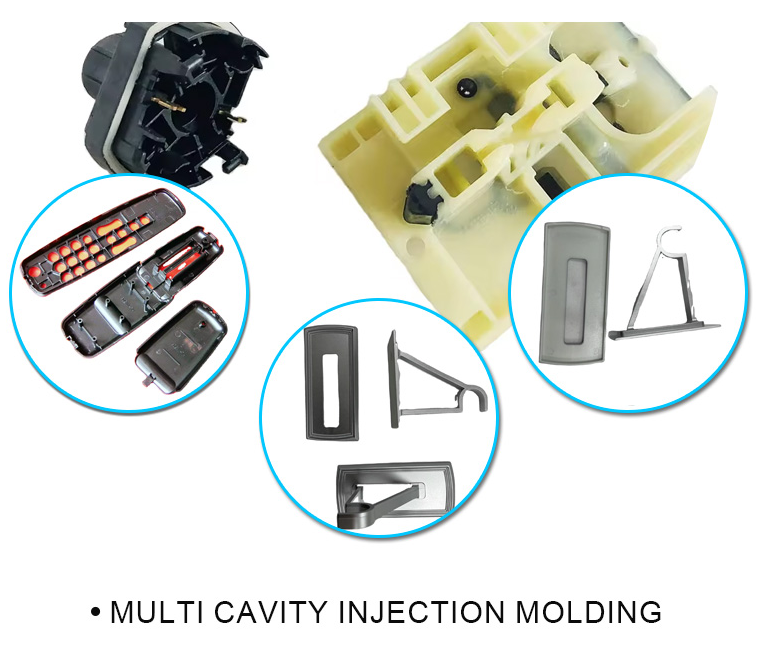
When making decisions about cavitation, manufacturers need to consider production volume, how much risk they can handle, and what the overall ownership costs will be. Going with multi cavity molds definitely cuts down on per part expenses when producing large quantities, but it comes at a price. The initial investment jumps substantially, plus there's added technical complexity involved. According to recent industry data from last year, creating a 32 cavity mold actually costs around 70 percent more compared to an 8 cavity version because of all the complicated runner balancing work needed, problems with tolerance stacking, and the extra validation requirements. However, if a company needs over half a million units annually, these higher capacity molds can cut individual part costs by as much as 40%. On the flip side, single cavity or family molds work best for prototyping purposes or small batch productions below 10 thousand units. They save companies between 55 and 80 percent on initial tooling costs, although each unit ends up costing more money. Doing break even calculations is still pretty important though. Take for example a 16 cavity mold priced at $120k versus a cheaper 4 cavity option at $40k. These two become equally cost effective once production hits roughly 250 thousand units.
Global Sourcing Realities: How Location and Supply Chain Shape Injection Mold Budgets
Offshore (China, Vietnam, Mexico) vs. nearshore/domestic: Cost, quality control, and communication trade-offs
Where parts are made makes a big difference in what injection mold projects actually cost beyond just what's on the quote sheet. Suppliers from places like China, Vietnam, and Mexico generally charge about half what US or EU manufacturers do for their labor costs. But here's the catch: these apparent savings tend to disappear fast when dealing with inconsistent product quality, slow communication back and forth, and all sorts of shipping headaches. Engineers working across different time zones often wait anywhere from one day to two full days just to get answers to basic questions during development, which really stretches out schedules. Working with nearby or local suppliers means better control over quality standards, immediate access to experts, and quicker fixes when something needs changing. Industry data suggests this approach cuts down on design changes by around 40%. When making complex molds that need constant tweaking, getting things right faster usually makes sense despite paying more for labor upfront.
Hidden supply chain costs: Lead time variability, NRE revisions, shipping, tariffs, and IP protection for importers
Beyond the base tooling quote, five often-overlooked factors regularly inflate total investment:
- Lead time variability: Ocean freight delays impact one in three shipments, triggering average production stoppages costing $18,000 each
- NRE revisions: Engineering changes during offshore tooling development commonly incur 15–25% rework fees
- Tariff structures: U.S. Section 301 duties on Chinese imports add 7–25% to mold procurement costs
- IP vulnerabilities: 68% of manufacturers lack enforceable confidentiality agreements when working with vendors in emerging markets
- Logistical overhead: Trans-Pacific mold transport insurance averages 2.5% of declared value
Importers who prioritize total cost of ownership—rather than lowest unit price—proactively mitigate these risks. Dual-source strategies—such as developing prototype molds domestically while scaling production offshore—enhance both budget discipline and supply chain resilience.
FAQ
What major factors influence the cost of injection molds?
The type of resin used, the mold material, design complexity, cavitation strategy, and sourcing location are major factors that influence injection mold costs.
Why are some materials more expensive to mold than others?
Materials with higher melting points, abrasiveness, or corrosive properties necessitate stronger mold steels and additional processing requirements, increasing costs.
How does mold complexity affect the cost?
Complex molds require additional mechanisms, high-quality materials, and precise machining, which typically increases costs.
What is the trade-off between different mold materials?
Materials like aluminum are cheaper and quick to machine but lack longevity, while steel offers durability at a higher cost.
How does sourcing location affect the overall cost of injection molds?
Offshore sourcing might lower upfront costs but may result in quality, communication, and shipping issues, potentially increasing the total cost of ownership.